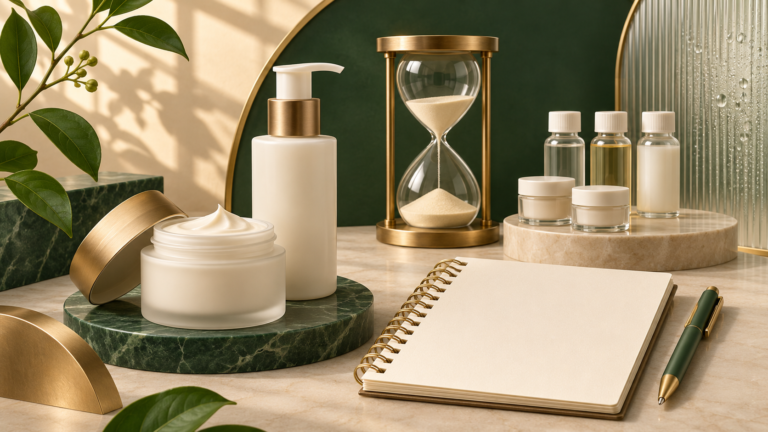
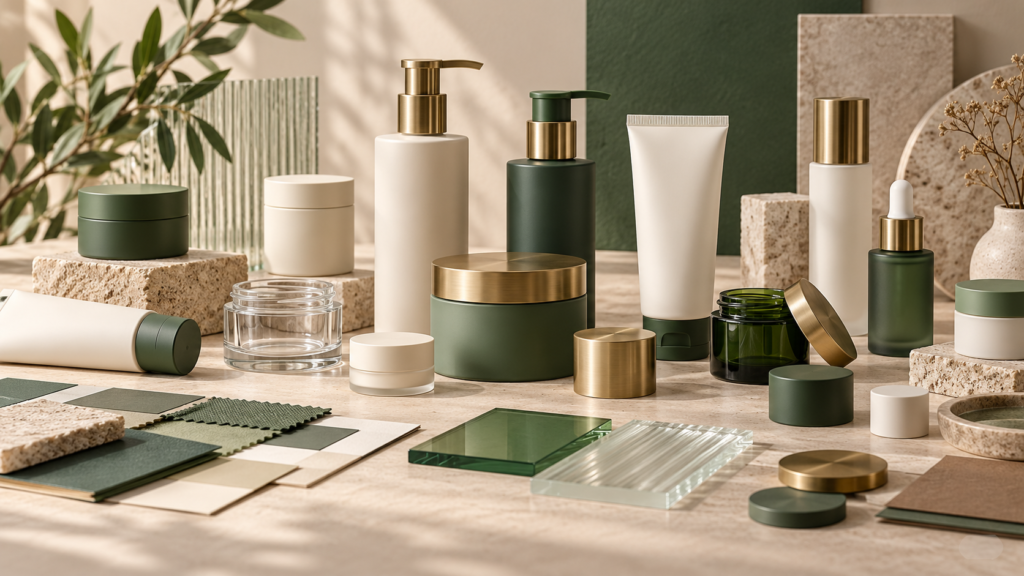
Cosmetic packaging compatibility is the assessment of how a specific formula and a specific package work together during the conditions they are expected to encounter. The work can include questions about product stability, material interaction, closure integrity, dispensing, storage, transport, and use. It is not a single test that automatically proves every aspect of a product is safe or ready to launch.
For a beauty brand, the most useful starting point is to define the complete product–package system: the formula version, container, closure, dispenser, other components that may contact the product, and the way a person will store and use it. Then ask qualified technical and regulatory specialists what information and evaluation are appropriate for that combination and its intended markets.
An attractive sample is an important part of selection, but it is only one decision. A bottle may look right and still need review for dispensing or contact with the formula. A successful leak check does not establish preservation adequacy. A report for one bottle and formula cannot automatically be applied to a changed pump or reformulated product. The team must record what was evaluated and decide whether the evidence supports the actual version moving forward.
This guide explains how to prepare a packaging brief, select components, plan an assessment, review results, and manage changes. The examples are general B2B guidance; the specific assessment depends on the product, package, conditions, and destination.
Packaging is part of the product system
The user experiences the formula through its package. A pump must dispense an amount that suits the intended use. A closure must fit the container. A label must remain legible and carry the information required for the market. During storage and distribution, the product and its package may encounter conditions different from those seen during a short sample review.
Think of the system as four connected elements:
- Formula: The identified composition, physical form, intended use, and version under review.
- Package: The container and all relevant contact components, closure, dispenser, decoration, and protective layers.
- Conditions: The expected filling, storage, transport, handling, and use of the finished product.
- Evidence: The specifications, supplier information, observations, assessments, and reports supporting each decision.
The European Commission's guidance for the EU cosmetic product safety report discusses the relevance of direct-contact packaging characteristics and possible interactions with the product. [1] That does not mean every package needs the same migration test or that an interaction has occurred in a particular product. It means the qualified assessor needs information appropriate to the actual combination.
Separate the approvals in your project plan. A brand can approve a package's appearance for further review while compatibility work is still open. A technical reviewer may accept a specific combination for a defined purpose. Safety, labeling, market, and production decisions may require additional work. Record the scope of each decision rather than using a single ambiguous “pack approved” status.
Start with a packaging brief
A packaging brief translates the product and business plan into requirements that a supplier or technical team can evaluate. It should describe what is known, what is preferred, and what remains undecided. The brief is a working document: update it when the formula, market, or expected use changes.
Begin with the product format and intended use. Is it a leave-on lotion, a rinse-off cleanser, a hair oil, or another cosmetic? How will the user open, dispense, apply, and store it? Is the package intended for repeated use, travel, refilling, or another use that the team should consider? Give the technical team the identified formula version or explain when it will become available.
Describe the proposed package and presentation: container shape, closure, pump or applicator, intended fill quantity, decoration, label, carton, and any protective shipping pack. If the team has a reference sample, specify what it illustrates. A visual reference may communicate the shape or brand direction, but it may not reveal the contact materials, component dimensions, or construction of the closure.
List the destination markets and the space available for required information. In the United States, cosmetic labeling requirements can include identity, net quantity, ingredients, firm information, and appropriate warnings, depending on the product and package. [6] EU requirements need their own product-specific review. [9] Involve the relevant specialists before artwork is treated as final.
Add the estimated order quantity, target cost, desired schedule, and distribution route as planning inputs. Do not treat an early target as a supplier's confirmed commitment. Ask suppliers which requirements affect component availability, tooling, decoration, shipping, or evaluation, and which choices can be adjusted if the first proposal does not fit.
Finally, distinguish requirements, preferences, and unknowns. For example, a pump may be necessary for the intended application, while a particular decoration may be a preference. The material used in a liner may still be unknown. Assign an owner to resolve each open item before the relevant decision point.
Define the complete package
A cosmetic pack is often an assembly of several components, not just a bottle or jar. The primary package contains or directly contacts the product. Depending on the design, relevant contact components can include the container, closure, liner, seal, pump, dip tube, dropper, or applicator. The actual contact surfaces and possible exposure need to be identified for the particular design.
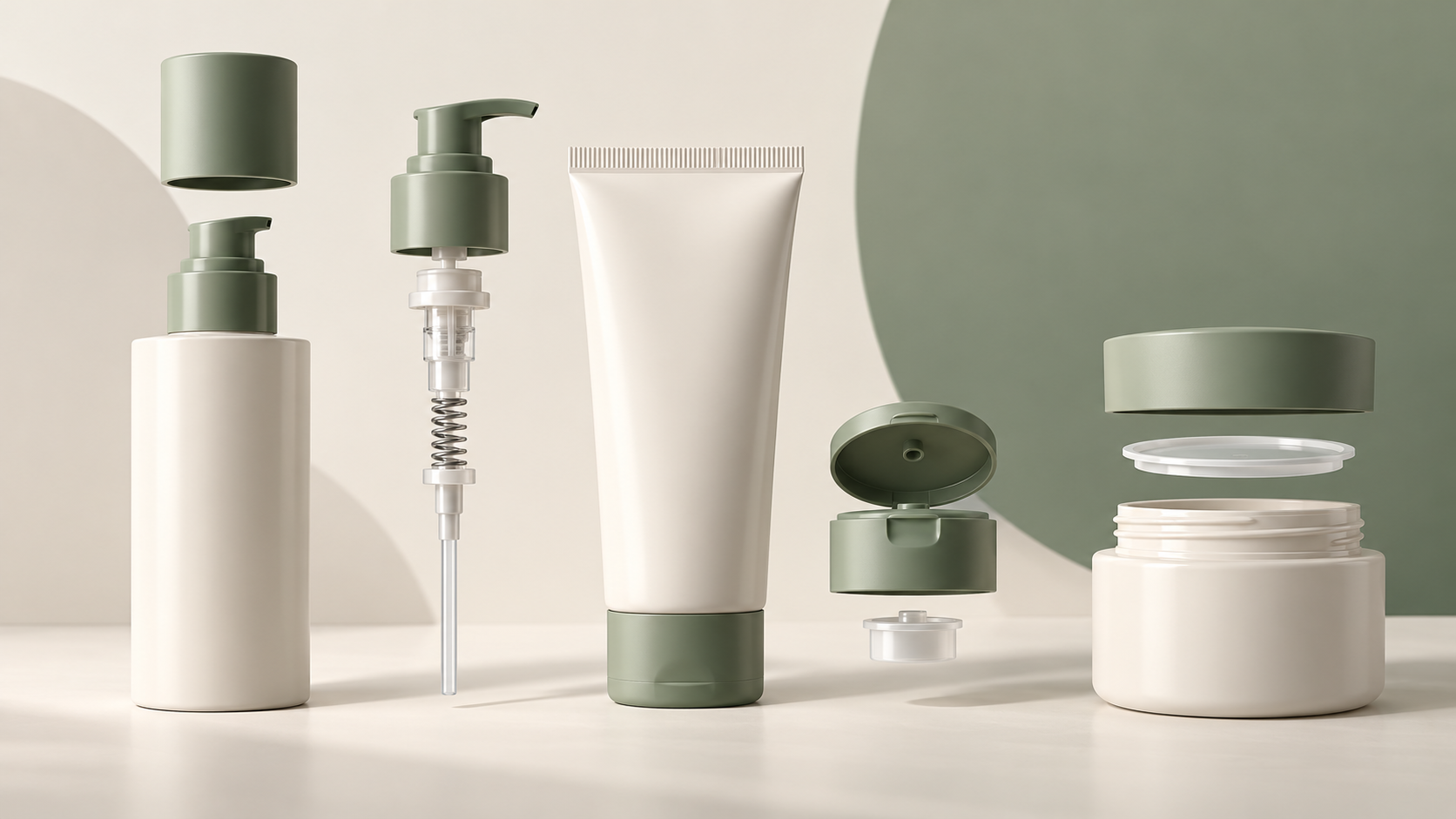
The secondary package might include a carton, insert, or other outer presentation. A separate shipper or protective material may be used during distribution. These components do not necessarily contact the formula, but they can affect identification, protection, information, and handling. Their suitability should be considered in the project plan.
Ask for a component list that identifies the supplier, part or drawing reference, material or construction where available, decoration, and revision. Record the intended combination, not just each part separately. A closure that appears to fit a container from another source should not be assumed interchangeable. The interface between components can affect sealing, operation, appearance, or filling.
Identify which parts may touch the formula during filling, storage, normal orientation, inversion, dispensing, or foreseeable use. For a pump, the product path may include more than the bottle and the visible actuator. For a jar, the closure or liner may be relevant depending on the design and conditions. Ask the supplier and technical assessor what information is needed; do not infer all contact surfaces from a marketing image.
Component identity matters after selection too. A resin, liner, pump spring arrangement, decoration process, or supplier can change while the outer appearance remains similar. A versioned component specification makes it possible to ask whether the existing evidence applies to the item actually ordered and received. FDA's cosmetics inspection checklist includes the identification and control of containers, closures, labels, and records among topics for review. [5]
Choose a container and dispensing format for the intended use
The best format depends on the product and the user. Compare options against the brief rather than treating one material or package shape as universally superior. The following questions help structure the decision; they do not predict the performance of an untested package.
Bottles and pumps
A bottle with a pump can provide a controlled way to dispense certain products, but the actual experience depends on the formula, pump design, fill, and user. Ask whether the supplier can provide the relevant component specifications and samples of the proposed combination. Review how the pump is opened, primed if applicable, operated, and closed or protected during distribution.
The team should consider the product path through the pump, the fit of the closure, and the behavior of the formula during dispensing. A package that dispenses a fluid product well should not be assumed suitable for a thicker formula without evaluation. A closed-looking pump does not, by itself, prove that the product cannot become contaminated during manufacture or use. [4]
Tubes, jars, droppers, and other formats
A tube may be appropriate for a product and application that benefit from squeezing. A jar gives the user a different way to access the contents. A dropper or applicator adds its own contact and use questions. In every case, identify the actual components, how the user interacts with them, and the conditions the product may encounter.
Review accessibility and practicality as part of the brief. Can the intended user open the package and understand how to dispense the product? Does the closure support the intended use? Can the chosen decoration and required text be produced legibly? These questions complement technical compatibility; they are not substitutes for it.
Materials and construction
Ask what is known about the material or construction of the proposed contact components and which supplier information can be shared with the product assessor. Consider the relevance of barrier properties, possible interaction, and the actual storage and use conditions. The answers depend on the formula and package; a material name alone does not establish that a package is inert, sterile, or suitable for every cosmetic.
Do not assume that a package has an environmental advantage solely because it is glass, plastic, paper, or another material. Its construction, components, collection systems, reuse or refill arrangements, and the claim made to the customer all matter. Any environmental statement needs evidence and an appropriately qualified review for the market where it will be used. [7]
What does cosmetic packaging compatibility mean?
Compatibility is a way to organize several related questions about a formula and package. A project may need to evaluate whether the product maintains relevant characteristics, whether the package continues to function, whether material–formula interaction raises a concern, and whether the proposed use and conditions are reflected in the evidence.
Product observations can include appearance, odor, consistency, or other properties selected by the technical team. Package observations can include changes in appearance, fit, closure operation, dispensing, leakage, or another relevant feature. These observations must be interpreted against an agreed objective, method, and acceptance basis. A change is a signal to investigate; it does not by itself identify its chemical cause or establish the level of risk.
Material interaction is another consideration. EU cosmetic safety report guidance discusses the composition of relevant packaging material, potential migration, barrier properties, and possible interaction with the formula or environment. [1] Whether a particular question requires additional data or a specific test is a matter for a qualified assessment of the actual product and available evidence. Do not state that a package has no migration or poses no risk without appropriate support.
Compatibility also differs from product stability. Stability concerns whether relevant characteristics remain acceptable under the chosen conditions. Packaging may influence those conditions, but a stability result does not automatically answer every question about leakage, dispensing, material interaction, or use. ISO's public stability guidance states that there is no single assessment suitable for every product and that the protocol needs justification. [2]
The term “pass” therefore needs a complete sentence: which version passed which assessment, under what conditions, against which criteria, and for what decision? A supplier's general assurance that it has used the bottle before is helpful context, but it is not a report for every possible formula and closure combination.
Prepare a risk-based packaging evaluation plan
An evaluation plan starts with the decision the team needs to make. For each concern, identify the specific product and package, the proposed use, the information already available, the remaining question, and the person qualified to choose and interpret the method. The plan should be tailored to the product and destination rather than copied unchanged from another project.

Identify the exact combination
Record the formula version and, where relevant, the sample or batch reference. Identify the container, closure, liner, dispenser, decoration or coating when relevant, and any other component the assessor needs to consider. Document the source and revision of each part and the way the samples were assembled or filled.
Also record what the sample represents. A prototype made by hand may answer a design question, while the team may need to consider whether it represents the intended production assembly for a later decision. If a component is provisional, say so in the plan. A provisional component should not silently become the basis for a final approval of a different part.
Define the question and method
For each assessment, write the objective in plain language. Examples include whether the selected dispenser works with the formula under the agreed use conditions, whether the closure remains functional after defined handling, or whether available material information is adequate for a safety assessment. The technical team chooses the method, conditions, sample selection, and acceptance criteria appropriate to the objective.
Agree on a baseline and how observations will be recorded. A baseline can help the reviewer distinguish an initial feature from a later change. Where a comparison sample or control is useful, the qualified team should define its purpose and limitations. Record dates, conditions, observations, and deviations so another reviewer can understand what was actually done.
Do not insert a standard temperature, duration, migration limit, or sample quantity merely because it appears in another product's report. ISO/TR 18811's public abstract explicitly notes the variety of products and conditions and the need to specify and justify a stability protocol. [2] FDA likewise explains that its US cosmetics overview does not provide one list of tests required for every product or ingredient. [8]
Assign decisions and document limits
Identify who performs the work, who receives the report, who interprets it, and who can approve the next step. The brand, package supplier, manufacturer, laboratory, safety assessor, and regulatory professional may each hold different information. Confirm the scope of each contribution and how confidential material will be shared when needed.
Record what the plan does not cover. If a proposed package has not been assessed for a particular market or condition, leave that item open until an appropriate person resolves it. A completed report should not be described as a general guarantee of performance, safety, or compliance in all circumstances.
Interpret stability and packaging observations
A useful report identifies the formula and pack, the conditions, the starting observations, the later observations, and the criteria used to interpret them. Ask whether the report addresses the actual decision in the brief and whether any unexpected event or deviation affected the work. The report owner should explain the conclusion and its limits.
Depending on the project, the team may observe changes in appearance, odor, consistency, container shape, decoration, seal, or dispensing. These are examples of possible observations, not a mandatory checklist. The technical team should decide which properties matter to the product and how they should be assessed. A visual change may warrant further investigation, but a person should not infer a specific chemical migration or safety outcome from appearance alone.
If the product separates, the closure behaves differently, or the package shows an unexpected change, retain the sample and records in accordance with the agreed process. Identify the affected version and conditions. Ask a qualified person to evaluate possible causes, whether the observation affects the intended use, and what additional information is needed. Record the decision and any change to the development plan.
FDA describes shelf life as dependent on product type, storage, and use, and notes that cosmetics can change over time. [3] A short observation of a sample cannot by itself establish a shelf life for every storage condition. Ask how the relevant stability and safety information supports the proposed period and whether the evaluated package is the package intended for launch.
If the formula or package is revised after a report is completed, do not discard the report automatically or apply it without review. Ask the technical assessor which findings remain relevant and which questions need new information. A documented rationale is more useful than an unsupported claim that the new component is “the same.”
Evaluate dispensing, leakage, and foreseeable use
The package must work for the intended product and user. Define the use cases in the brief: how the product is opened, stored, carried, dispensed, and closed; whether the container may be inverted; and whether repeated operation is expected. The team can then select appropriate methods and decision criteria for those conditions.
For a pump, review the fit, operation, product delivery, and interaction of the dispenser with the container and formula. For a tube, the team may consider closure operation and dispensing under the intended use. For a jar or dropper, the assessment may include how the user accesses the contents and which components can contact the product. These are questions to evaluate, not claims that any format is inherently safe or unsafe.
Leakage and closure integrity are distinct from formula stability. A product can look unchanged while a closure leaks, or a package can remain closed while the formula changes. Agree which orientations, handling, and conditions are relevant to the project. Define how an observation is recorded and who determines whether it is acceptable for the intended distribution and use.
Consider cleanliness and microbiological risk in context. FDA describes how manufacturing, packaging, storage, and consumer handling can contribute to contamination. [4] A closure that performs well in a leakage assessment does not establish that a preservation system is adequate. Conversely, a product's microbiological assessment does not automatically prove that its dispenser works as intended. Qualified specialists should connect the relevant evidence without treating one result as a substitute for another.
If the product is intended to be refilled or reused, define the actual refill system and instructions before assessing the claim or the package. Ask how the team will evaluate the components and foreseeable handling. Avoid assuming that an empty container is suitable for indefinite reuse or that a refill claim can be made without product-specific evidence.
Plan for storage, shipping, and handling
A package that remains on a development bench may not encounter the same conditions as a finished product moving through a supply chain. Describe the expected route as accurately as possible: filling site, storage, protective packaging, modes of transport, distribution, retailer handling, and likely consumer use. Identify which details are confirmed and which are assumptions.

Ask the packaging and logistics teams which risks are relevant to that route. These may include physical handling, orientation, changes in environmental conditions, compression, movement between locations, or the effect of the protective shipper. The appropriate assessment depends on the actual product and distribution plan. This guide does not prescribe a universal transport test or claim that a particular standard is legally required for every cosmetic.
Agree which version of the product and shipping configuration will be evaluated. If the protective carton or packing method changes, the team should consider whether the earlier information remains applicable. Record who is responsible for selecting the plan, supplying samples, reviewing observations, and resolving an issue.
Storage and use can also affect the product itself. FDA notes that environmental conditions and consumer handling can influence cosmetic shelf life and contamination risks. [3, 4] A distribution plan should therefore be coordinated with the product's stability and microbiological assessment, while keeping each question and conclusion distinct.
Review label space and environmental claims
Packaging design and regulatory review need to progress together. Leave enough space for the information required in the destination market and ensure that the chosen decoration or label can present it legibly. In the United States, FDA's labeling summary addresses topics such as product identity, net quantity, ingredients, firm information, and warnings where applicable. [6] The actual requirements depend on the product and package, and other rules may apply if the product is also a drug.
For the EU, the responsible person and qualified specialists should review the final product, safety information, labeling, and notification requirements under the applicable framework. [9] Notification should not be described as approval. Verify current rules, applicable languages, and the actual product before finalizing artwork for a market. A packaging supplier's design file is not a regulatory determination.
Environmental statements deserve the same care as product claims. If the brand wants to say that a pack is recyclable, contains recycled material, or can be refilled, define precisely what the statement covers and gather evidence for that component and market. A bottle, pump, liner, and label may have different characteristics, and local collection or processing conditions can affect what a consumer can actually do.
The US Federal Trade Commission's Green Guides advise marketers to avoid broad, unqualified environmental benefit claims and to use clear, specific qualifications where appropriate. [7] The guidance does not establish that any particular package is recyclable. Avoid using “sustainable,” “eco-friendly,” or similar broad language as a substitute for a substantiated, specific statement.
Keep documents and decisions connected
A packaging handover should allow the next person to reconstruct what was selected and why. Keep the brief, formula reference, component specifications, supplier information, evaluation plan, reports, observations, assessments, and approvals connected through clear version identifiers. Record outstanding items and the person responsible for each.
The documentation should distinguish information supplied by a component manufacturer from conclusions reached by the product's safety or technical reviewer. Supplier data about a material can be useful, but it must be assessed in the context of the finished cosmetic and actual use. EU guidance notes that information about packaging may be relevant to the safety report; it does not make a food-contact declaration a substitute for a cosmetic safety assessment. [1]
Create a change record when the resin, liner, pump, closure, component supplier, formula, filling process, decoration, or other relevant feature changes. Describe the change, its reason, the affected versions, and the decision owner. Ask qualified reviewers whether the existing evidence remains applicable and whether further work is needed. Some changes may have limited impact; others may alter the assessment. The conclusion must be specific to the change.
Agree on the control of packaging artwork and obsolete components. FDA's inspection guidance discusses label identification and control as part of manufacturing review. [5] The brand and manufacturer should know which artwork version is approved for which product and market, how it reaches production, and what happens to unused versions when a change is made.
Finally, define who may approve appearance, technical suitability, safety documentation, regulatory labeling, and production use. These responsibilities may sit with different people or organizations. A written record of the decision and its scope reduces the chance that an approval for one purpose is mistaken for approval of the entire product.
Questions to ask a packaging supplier
Use the following questions to compare proposals and identify gaps. The information available may depend on the supplier's role, confidentiality arrangements, and the project agreement.
| Topic | Questions for the supplier or project team |
|---|---|
| Component identity | What are the container, closure, liner, pump, and other relevant part references? Which surfaces can contact the product? |
| Material information | What information can be provided to the technical or safety assessor about composition, construction, and relevant properties? |
| Sample representativeness | Do the samples represent the intended production components and assembly? Which parts are provisional? |
| Evaluation | What questions will be assessed for the exact formula and package? Who selects the methods and interprets results? |
| Use and distribution | How will the intended dispensing, storage, handling, and shipping configuration be considered? |
| Label and claims | Who reviews the artwork, required information, and any environmental statement for each market? |
| Changes | How will changes to materials, suppliers, molds, decoration, or components be communicated and assessed? |
| Commercial scope | What quantities, tooling, decoration, timing assumptions, and separate charges apply to the proposed components? |
Ask for a written proposal that separates what is confirmed from what requires further review. A package supplier may provide component data, while a manufacturer or laboratory performs another part of the work. Make the interfaces explicit so that a gap between suppliers does not become an unassigned project risk.
A hypothetical moisturizer and pump project
Imagine a fictional brand developing a leave-on body moisturizer in a pump bottle for specified markets. The brand likes the appearance of an initial container but has not yet confirmed the pump's product-contact components. The formula is still being refined. This scenario is illustrative and does not describe a YOUREE product, supplier, or test result.
The project team records the formula version, the proposed bottle and pump references, the intended application, and the planned distribution route. It asks the component supplier for relevant material information and samples representing the proposed assembly. The brand separates the appearance approval from the technical decision about the formula and pack.
Qualified specialists then define the questions and methods relevant to the actual combination. These may include product observations, pump operation, closure function, storage and handling, and information needed for the applicable safety assessment. The scenario assumes no particular method, measurement, duration, or outcome. If an observation is unexpected, the team records it and decides what further review is needed.
Later, the pump supplier proposes a component change. The team identifies the changed part and asks whether the earlier evidence applies to the revised assembly. It documents the decision and updates the specification before the new part is used. This process gives the brand a traceable basis for deciding, even when the final answer is that more information is needed.
Frequently asked questions
Is compatibility testing one standard test?
No. Compatibility is a set of questions about a particular formula, package, conditions, and intended use. The appropriate plan may consider stability, product–material interaction, closure function, dispensing, storage, or other relevant concerns. A qualified team should define the methods and criteria for the actual project. [1, 2]
Does a package used for another cosmetic automatically suit my formula?
No. Previous use can provide useful context, but formulas, contact components, storage, and use conditions can differ. Ask what evidence exists, which combination it covers, and whether a qualified reviewer considers it relevant to your product. Do not rely on a similar appearance or a supplier's general description alone.
Does a successful leak check prove the product is safe?
No. A leak check addresses a defined aspect of package function under specified conditions. It does not independently establish product safety, preservation adequacy, stability, or compliance with the rules of a destination market. Review those questions separately and connect the conclusions where appropriate. [4, 8]
Do all cosmetic packages require the same migration test?
Do not assume a universal test. The EU safety report guidance discusses possible migration and other relevant packaging characteristics, but the actual information and assessment depend on the formula, packaging, exposure, available evidence, and applicable requirements. A qualified assessor should determine what is needed for the specific product. [1]
Can I change the pump after a formula and bottle have been assessed?
A change can be proposed, but it should be identified and reviewed through the agreed change process. The new pump may have different contact surfaces, fit, or dispensing behavior. The technical team should decide which existing information remains relevant and whether additional work is needed before the revised combination is approved.
Is a food-contact declaration enough for a cosmetic package?
It may be one piece of information that a qualified assessor considers, but it is not automatically a cosmetic safety assessment or proof that the final cosmetic–package combination is suitable. EU guidance discusses information about packaging in the context of the cosmetic product safety report. [1] The assessor must consider the actual product and applicable rules.
Prepare for your next packaging decision
Bring the exact formula version, intended use, destination markets, proposed components, expected distribution route, and open questions to the packaging discussion. Ask for the information needed to identify each component and agree who will assess the formula–package combination.
Then connect each decision to a record: what was reviewed, under which conditions, by whom, and for what purpose. That makes packaging selection easier to manage as the product moves from an initial idea to a controlled production plan.
References
Sources checked 31 October 2026. Regulatory guidance and standards can change; confirm the current requirements and the actual formula, packaging, and market before making a project decision. The ISO description below is based on its public abstract, not the complete paid report.
- European Commission. Implementing Decision 2013/674/EU: Guidelines on Annex I to Regulation (EC) No 1223/2009, 25 November 2013, sections 3.2.3 and 3.4.3. Verify current law and guidance for the project.
- International Organization for Standardization. ISO/TR 18811:2018, Cosmetics — Guidelines on the stability testing of cosmetic products, public abstract.
- US Food and Drug Administration. Shelf Life and Expiration Dating of Cosmetics.
- US Food and Drug Administration. Microbiological Safety and Cosmetics.
- US Food and Drug Administration. Good Manufacturing Practice (GMP) Guidelines/Inspection Checklist for Cosmetics.
- US Food and Drug Administration. Summary of Cosmetics Labeling Requirements.
- US Federal Trade Commission. Environmental Claims: Summary of the Green Guides.
- US Food and Drug Administration. Product Testing of Cosmetics.
- European Commission. Cosmetics legislation.
Developing a product of your own?
Share your brief with our team to explore formula, packaging and sampling options.
Discuss your project