
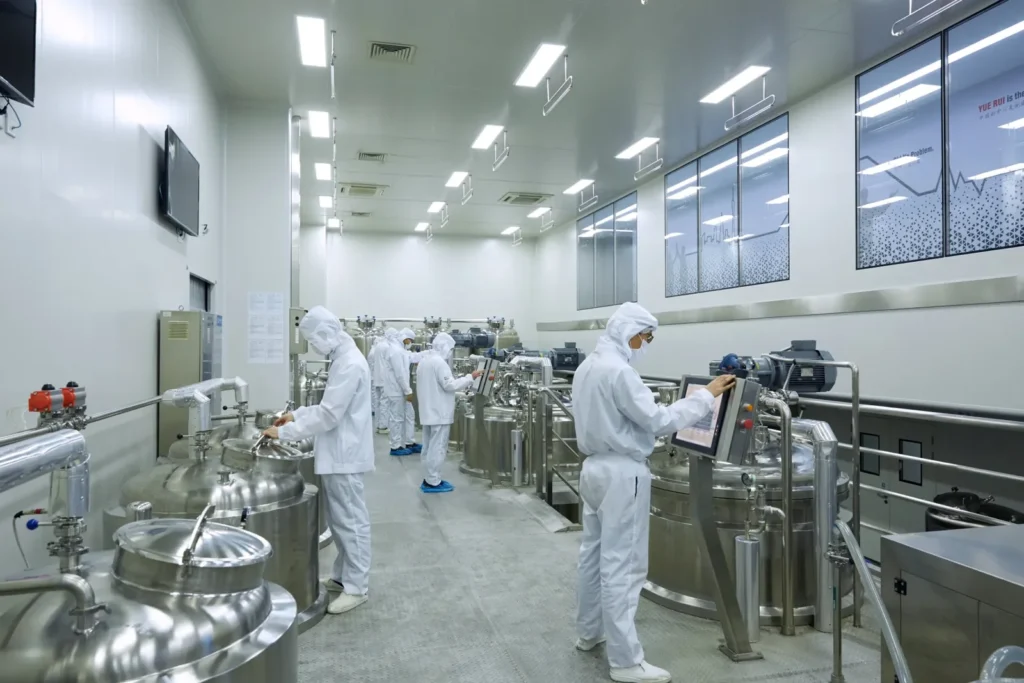
When a formula moves from development to production, the way ingredients are measured and processed matters. YOUREE’s manufacturing presentation describes a digital weighing system linked with MES-controlled emulsification to support that transition.
Connect the formula to weighing
In the documented process, a production instruction identifies the formula and sends its ingredient information to the weighing system. Operators scan materials as part of the weighing workflow, connecting the physical ingredients with the production instructions.
The purpose is to make the required material and quantity visible at the point of use. This is a process control: it supports the work of trained operators rather than removing the need for material inspection or supervision.
Follow the agreed processing sequence
After weighed ingredients are confirmed for addition to the emulsification equipment, the MES system follows the preset manufacturing process. Prompts guide subsequent additions as the relevant stages are completed.
For a brand team, this is a useful distinction. A formula is more than a list of ingredients. The production instructions also describe how those materials move through a controlled process.
- Which formula version is being manufactured?
- How are ingredients identified and weighed?
- How are additions linked to the processing sequence?
- Which records support review of the batch?
Keep quality checks in the picture
Digital control sits alongside the other checks described in YOUREE’s materials: incoming-material inspection, semi-finished product testing, finished-product inspection and retained samples. It does not replace those activities.
When discussing a new product, ask how the approved sample, the manufacturing instructions and the batch records connect. The answer helps explain how a development decision is carried into a repeatable production workflow.
Developing a product of your own?
Share your brief with our team to explore formula, packaging and sampling options.
Discuss your project